POLISHED FLOORS · NORTHERN KENTUCKY

POLISHED CONCRETE FLOORS · GARAGE, BASEMENT, WAREHOUSE

Spencer’s Outdoor Solutions grinds and polishes concrete floors across Northern Kentucky — new pours and existing slabs, residential garages and basements to commercial warehouse floors. Five gloss levels from matte satin to mirror finish, three aggregate exposure options, and a sealed finish that lasts years with only a floor squeegee for maintenance.
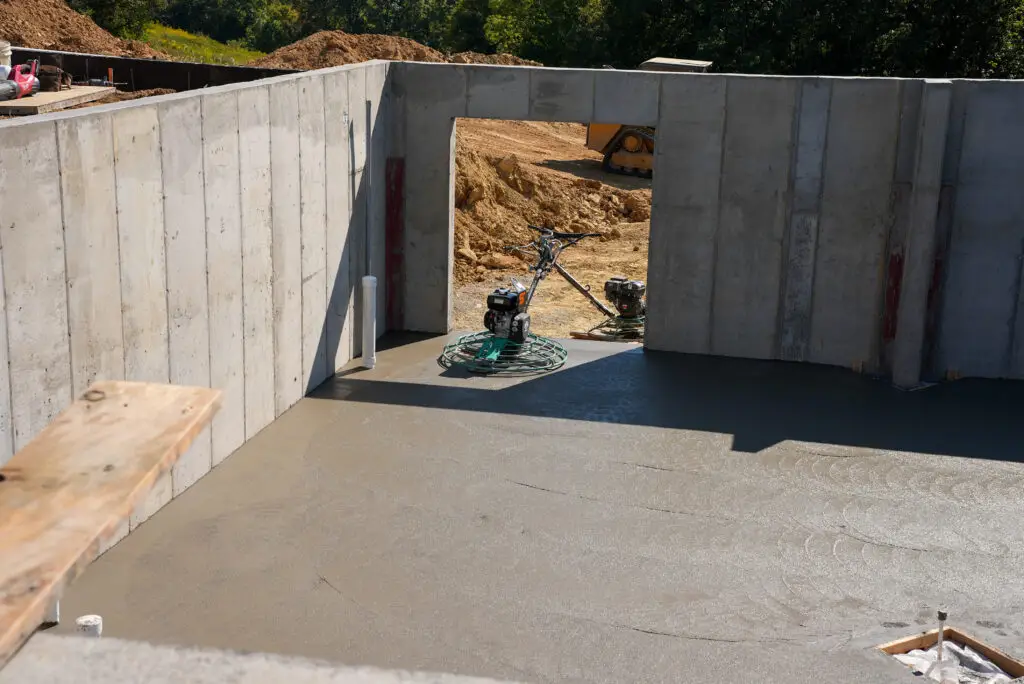
Two walk-behind power trowels resting in a basement foundation doorway after Spencer's crew finished the concrete floor

WHAT SPENCER'S POLISHES

What's the Difference Between Sealed and Polished Concrete?

FIVE GLOSS LEVELS, THREE AGGREGATE EXPOSURES

Polished concrete is not the same as sealed concrete. Sealing applies a topical coating that eventually wears through. Polishing mechanically grinds and refines the concrete surface itself with progressively finer diamond abrasives, then densifies it with a lithium silicate hardener that reacts chemically with the concrete. The result is a floor that is the finished surface — no coating to peel, no sheen to wear off, and no plywood-and-thinset system underneath.

WHERE SPENCER'S WORKS

NORTHERN KENTUCKY, ROOTED IN GRANT & BOONE COUNTIES

Spencer’s Outdoor Solutions services Grant, Boone, Kenton, and Campbell counties from the Dry Ridge HQ. Town list includes Williamstown, Crittenden, Verona, Walton, Union, Florence, Burlington, Hebron, Independence, Erlanger, Fort Mitchell, Covington, Newport, and Fort Thomas. Free estimates within 24 hours.

POLISHED CONCRETE QUESTIONS

Sealing applies a topical coating on top of the concrete. Polishing mechanically grinds the concrete surface itself with progressively finer diamond abrasives, then chemically densifies it with a lithium silicate. The polished floor is the finished surface — there’s nothing to peel, chip, or reapply. Sealers eventually wear through and need recoating; a properly polished floor lasts much longer with only a periodic re-densify.
Both. Polishing an existing slab is the more common Northern Kentucky project — a residential garage floor, a basement, a warehouse. Spencer’s evaluates the slab first: cracks, oil stains, prior coatings, and moisture all affect the final look. A slab with heavy contamination or prior epoxy may need a grind-and-seal approach rather than full polish. New pours polished from day one give the best long-term result.
A typical residential garage floor takes a few days. Larger basements take longer. Commercial warehouse floors run at a set pace per day depending on the gloss level and existing slab condition. The floor is walkable within hours of the final polish pass. Every project’s timeline is confirmed during the site visit.
No topical sealer is required. The lithium silicate densifier reacts chemically with the concrete to create the finished surface. However, most polished floors get a stain-guard treatment (a penetrating impregnator) applied after the final polish that reduces staining from oil, wine, and other spills. That treatment is included in Spencer’s polishing quote.
Every polished concrete job is priced from a site visit. The final quote depends on gloss level, square footage, aggregate exposure, existing slab condition (cracks, oil stains, prior coatings), and any repair work needed before polishing begins. Photos of the existing slab help Spencer scope the job before the visit.

QUOTE A POLISHED FLOOR

Describe the space (garage, basement, warehouse), square footage, current slab condition, and the finish level you’re targeting. Photos of the existing slab speed the quote.