
DECORATIVE CONCRETE · NORTHERN KENTUCKY
STAMPED & STAINED DECORATIVE CONCRETE
Spencer’s Outdoor Solutions installs decorative stamped concrete and acid-stained concrete across Grant, Boone, Kenton, and Campbell counties. Slate, brick, and stone-textured patterns for patios, walkways, and pool decks. Integral color, surface stains, and a sealed finish that holds up against Northern Kentucky UV and freeze-thaw. The same concrete that holds up under traffic, dressed for an outdoor living space.
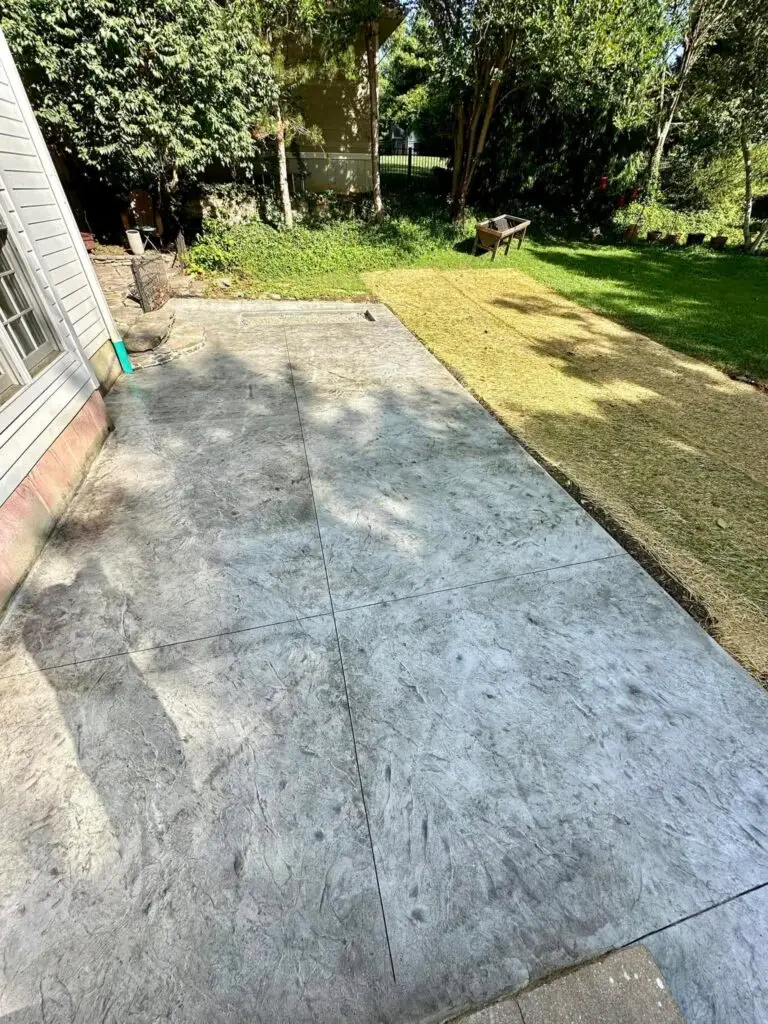
WHAT SPENCER'S BUILDS
What's the Difference Between Stamped and Stained Concrete?
PATTERNS, COLORS, AND ACID-STAINED FINISHES
Stamped concrete is poured the same way as a standard slab, then textured with patterned stamps while the concrete is still plastic. Slate, ashlar slate, English cobble, and running-bond brick are the common picks for Northern Kentucky homes. Integral color mixed into the truck gives the slab a base tone; a surface release color hits the high spots to create the depth that makes a stamped slab look like real stone.
Acid-stained concrete works differently. The slab is poured smooth, cured, then acid-stained with reactive chemicals that produce mottled, organic color variation. Acid stain reads more like natural stone than stamped concrete and works on both new pours and existing slabs. Spencer’s seals every decorative pour to protect color from UV and weather.
- Stamped concrete patios, walkways, and pool decks
- Stamped concrete driveways with custom radius work
- Acid-stained interior and exterior concrete
- Slate, ashlar slate, English cobble, and brick patterns
- Integral color mixed at the ready-mix truck
- Sealed for UV, weather, and freeze-thaw durability
BEYOND STAMPED
COLORED, ACID-STAINED, AND EXPOSED AGGREGATE FINISHES
Stamping isn’t the only way to get concrete out of plain gray. Spencer’s Outdoor Solutions pours three additional decorative finishes across Northern Kentucky — each with its own look and maintenance profile:
Integral color
Pigment added to the concrete at the ready-mix plant so the color runs all the way through the slab — not just the surface. When the concrete chips or wears, the color underneath matches. Best for driveways, walkways, and patios that see heavy foot or vehicle traffic.
Acid stain
Reactive stain applied to cured concrete that creates variegated, marble-like color patterns. Every slab is unique — the acid reacts with the calcium hydroxide in the concrete to produce colors that are impossible to replicate with paint or dye. Works on existing slabs too (patios, garage floors, basement floors).
Exposed aggregate
Top layer of cement paste washed off within hours of pouring to reveal the decorative stone (pea gravel, river rock, granite chips) that was added to the mix. Non-slip surface, ages well, hides staining. Common on driveways, pool decks, and outdoor entrances.
Sealing note: All three finishes should be sealed on a 2–5 year cycle to maintain color and prevent staining. See concrete sealing for more.
WHERE SPENCER'S WORKS
NORTHERN KENTUCKY, ROOTED IN GRANT & BOONE COUNTIES
Concrete work runs from the Dry Ridge yard outward — covering Grant County in full, the I-75 belt south of Cincinnati, and the river cities on the Kentucky side. Spencer keeps the schedule tight because the yard is central to every job within a 35-mile drive.
STAMPED & STAINED CONCRETE QUESTIONS
QUOTE A DECORATIVE POUR
Send the project details and Spencer follows up within 24 hours with finish samples and a written estimate.